

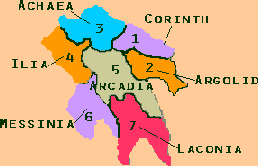
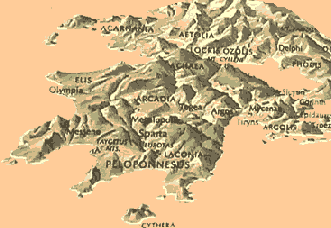
Known in ancient times as Aigialos or Aigialeia, around 2000 BC the Achaeans migrated from the north and settled giving it the name Achaea or Achaia.
This Greek Peloponnesian prefecture comprises some 3,271 km, has two major mountains: Chelmos (2,355m) and Erymanthos (2,224m). There are numerous rivers: the Vouraikos, Pyrros, Glafkos and the Selinoundas all which contribute to the well watered fertility of the region.
The modern towns of Patras and Rio are two transportation hubs connecting mainland Greece with the Ionian archipelago & Italy and with Sterea Ellada respectively.
Achaea is perhaps unique in that its inhabitants, among other more prosaic goods such as cheese and leather, bred silkworms and made silk in the Vouraikos gorge region.
Today many agricultural goods are produced especially wine. Achaea is the most densely settled prefecture of the Peloponnese with over 300,000 inhabitants many of whom live in Patras, Greece's 4th largest city.
Left to right: Patra Castle, Odeon at Patra, Map Patra / Nafpatakos
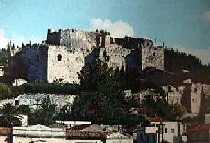
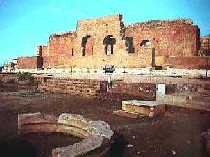
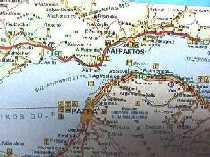
left to right: Cog Wheel railroad to Vouraikos Gorge, War of Independence declared March 25th, 1821, Aghia Lavra Monastery. Patra.


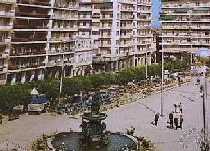
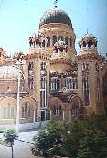
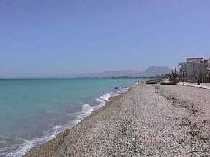
Below: St. Andrews Cathedral Patras. Typical beach, Gulf of Patras.

Why not enjoy Harry's Free Musical Compositions while you read this site? (opens seperately)
©Harry's Greece Travel Guides