
 Aghia
Evfimia is a small coastal village with two hotels at the base of
Kefallonia's northern most appendage and where ferries to Ithika and
Stakes may be boarded. There are some decent pebble beaches off the
road from Sami heading into town. Above it, and spared by the quake,
is the traditional village of Drakopoulata. Close by are other
traditional villages clinging to the slopes of Mt. Agh. Dinati. The
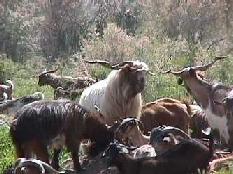
soil has a particularly high mica content and causes the teeth of grazing
goats to turn silver in color.
Aghia
Evfimia is a small coastal village with two hotels at the base of
Kefallonia's northern most appendage and where ferries to Ithika and
Stakes may be boarded. There are some decent pebble beaches off the
road from Sami heading into town. Above it, and spared by the quake,
is the traditional village of Drakopoulata. Close by are other
traditional villages clinging to the slopes of Mt. Agh. Dinati. The
soil has a particularly high mica content and causes the teeth of grazing
goats to turn silver in color.
 From Argostoli the road north towards
the island's tip reveals one beautiful scene after another. Aghia Kiriaki has the first good beach, below the village of
Zola, and sits at
the elbow joint linking the Paliki peninsula to the rest of the island.
Eight km on, Myrtos Bay has a good pebble beach, a pricey cafe and sunbeds
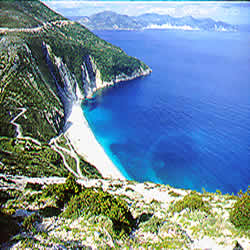
but no afternoon shade. Its three km below the village of Divarata. Perhaps the best view of Myrtos for photographic purposes
is along the road north to Fiskardo. From that high vantage point, you can admire the white sand, blue water and tall limestone cliffs of Myrtos.
From Argostoli the road north towards
the island's tip reveals one beautiful scene after another. Aghia Kiriaki has the first good beach, below the village of
Zola, and sits at
the elbow joint linking the Paliki peninsula to the rest of the island.
Eight km on, Myrtos Bay has a good pebble beach, a pricey cafe and sunbeds
but no afternoon shade. Its three km below the village of Divarata. Perhaps the best view of Myrtos for photographic purposes
is along the road north to Fiskardo. From that high vantage point, you can admire the white sand, blue water and tall limestone cliffs of Myrtos.
 Assos is perhaps the prettiest spot on the island and here were filmed many
of the sunset scenes from the movie Captain Corelli's Mandolin. The whitewashed and pastel houses of Assos straddle the
isthmus of a peninsula. This
tiny fishing village of 85 residents gets overwhelmed in season and the reasons
are obvious. It sits at the bottom of a steep and winding road tucked in the
cranny of the isthmus and a a huge rock topped by a Venetian castle. No beaches
exist but there are small coves accusable by boat. The Castle may be reached after a serious climb but is worth it for
the views. A car can get you up as well. The village was destroyed in the
earthquake but rebuilt by French funds which did a pretty good job in keeping
with its natural surroundings. At night when the day trippers leave, it returns
to its small Greek fishing village persona, although many yachties may berth
there for overnights. The castle is in a state of ruin but quite a bit remains.
During WWII, 1,500 Italian troops were lined up and shot by the Nazis here.
Assos is perhaps the prettiest spot on the island and here were filmed many
of the sunset scenes from the movie Captain Corelli's Mandolin. The whitewashed and pastel houses of Assos straddle the
isthmus of a peninsula. This
tiny fishing village of 85 residents gets overwhelmed in season and the reasons
are obvious. It sits at the bottom of a steep and winding road tucked in the
cranny of the isthmus and a a huge rock topped by a Venetian castle. No beaches
exist but there are small coves accusable by boat. The Castle may be reached after a serious climb but is worth it for
the views. A car can get you up as well. The village was destroyed in the
earthquake but rebuilt by French funds which did a pretty good job in keeping
with its natural surroundings. At night when the day trippers leave, it returns
to its small Greek fishing village persona, although many yachties may berth
there for overnights. The castle is in a state of ruin but quite a bit remains.
During WWII, 1,500 Italian troops were lined up and shot by the Nazis here.
The road continues north to Cape Ather and passes several villages on the way to picturesque Fiskardo, (pop 100) which was spared the earthquakes wrath but has turned into a trendy over-hyped tourist attraction with little charm in season. There are one or two shingle beaches to either side but better ask the way. There are many over priced tourist shops. Off season is the time to visit Fiskardo, not July or June.
More Keffalonia Page: 1 | 2 | 3 | 4 | 5 | 6 | 7 | 8 | 9 | 10

Why not enjoy Harry's Free Musical Compositions while you read this site? (opens seperately)
©Harry's Greece Travel Guides